
The name "carnevale" comes from the Italian "carne levare" or similar, meaning "to remove meat", since meat is prohibited during Lent. In fact carnival time marks the start of the period of Lent, 40 days before Easter.
Carnival perpetuated pre-Christian rites of farmers and herders promoting the springtime renewal of life. Since early times carnivals have been accompanied by parades, masquerades, pageants, and other forms of revelry that had their origins in pre-Christian pagan rites.
People often dress up or masquerade during the celebrations, which mark an overturning of daily life. Masks are the real protagonists of Carnival!
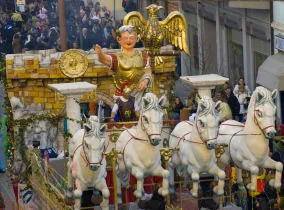
If you're near Rome, the most significant carnival event is the Carnevale of Tivoli, characterized by enormous allegorical floats depicting Italian history and culture.
The ancient town of Tivoli also hosts events with jugglers, hot air balloons, and the classic parade of floats with more than 600 participants. "Zibaldone" is the official mask of the Carnevale of Tivoli.
The theme of the allegorical floats is decided from year to year.